




 Upcoming Events
 Event Series
 On-Demand Events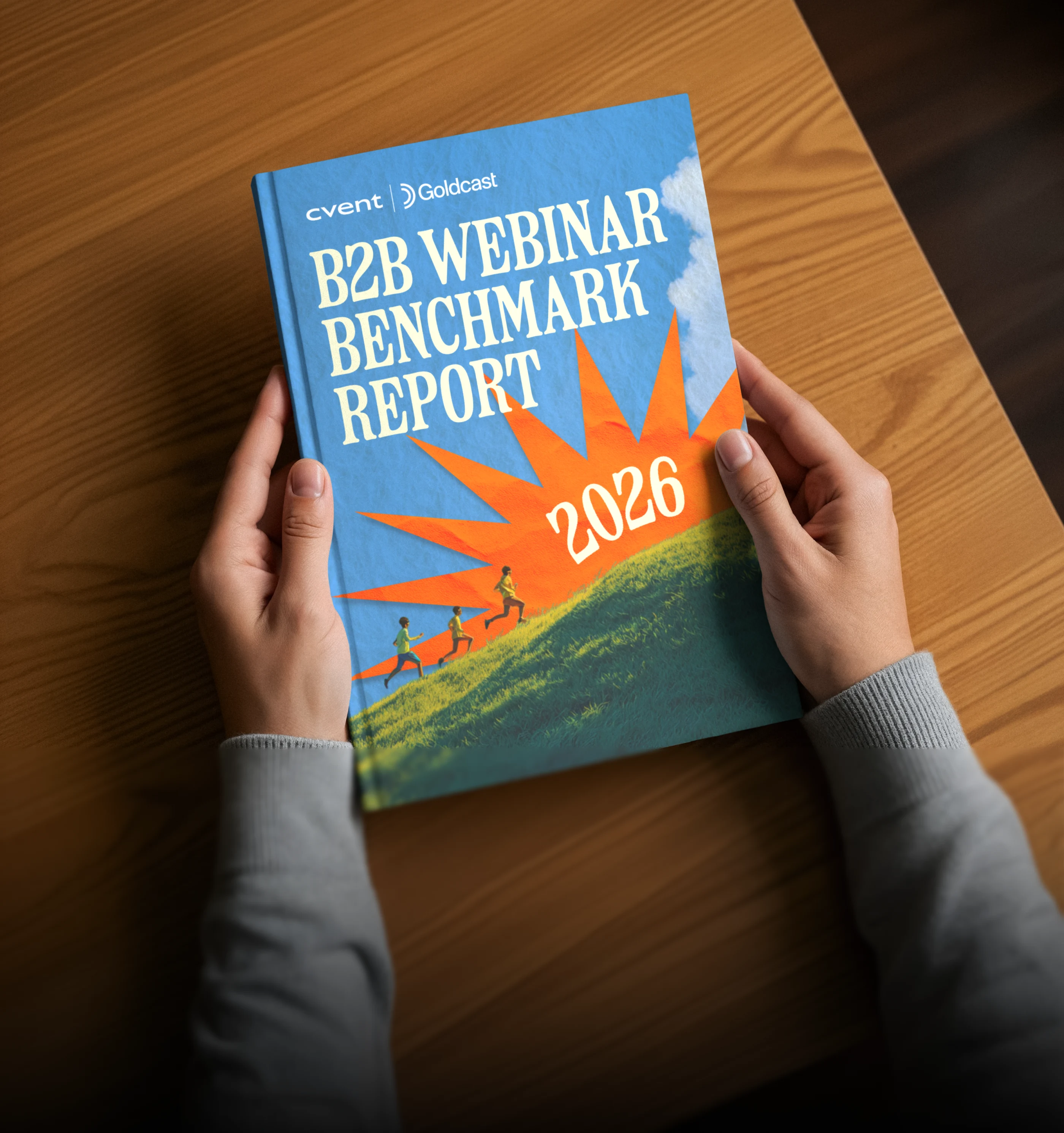


Your Go-to B2B Video Marketing Guide for 2026

Table of Contents
Maximize Your Marketing ROI
Join 10,000 other marketers already getting the best tips on running engaging events that boost pipeline and create raving fans.
It’s a great time to be a B2B video marketer. According to Wyzowl, 91% of businesses use video as a marketing tool. That’s an all-time high and reflects the urgency around doing video (and doing it well).
In this guide, we'll walk through the strategy, the formats, and the workflow that make a sustainable B2B video program possible, without burning out your team.
And, to keep things meta, if you prefer to learn about video through a video, click below:
Where video fits into your strategy (and where to start)
With 82% of consumers saying they've been persuaded to make a purchase because of a video, video is a surefire way to get on people’s minds.
For many B2B marketers, events are the natural place to focus your video efforts. They're live, authentic, and engaging. With the right platform, events also give you a trackable content engine: from registrations and live attendance rate to poll participation, CTA clicks, and meeting bookings.
Here are some of the ways video fits into a broader multichannel strategy:
- Set clear goals: Pinpoint the broader marketing objectives your video program should support, then assign the right metrics to the right programs.
- Repurpose content for other programs: For maximum ROI, use your video source material to fuel snackable snippets for social, sales follow-ups, and ABM campaigns.
- Allocate production budget to video: By investing some of your production spend into video creation, you can start identifying the use cases with the best return.
- Find the right partners: Depending on your scope and budget, partner with an agency, build an internal team, or take a hybrid approach.
From keynote insights from industry experts to candid conversations with your target audience, digital events are a goldmine of long-form video content that can be sliced into shorter pieces to capture attention on any channel. If you’re looking for a place to start, there’s your answer!
The case for B2B video is pretty much closed
B2B customers are people, just like everyone else. They expect the same immersive content experiences they get from platforms like HBO and Amazon Prime — and they want them on their terms, on their schedule, on whichever device they happen to be holding.
"For us, audio and video are hugely important and are a growing percentage of our content offering. And it's really because we want to meet people where they are and serve up our content in the way they want to consume it," said Sarah Johnson, Co-Head of Global Marketing at Capital Group, speaking on CMO Diaries, Goldcast's former interview series for marketing leaders.
Sarah's sentiment has only gotten truer since we wrapped that episode. Data shows that 75% of B2B buyers use social media when making purchasing decisions. Check out these stats:
- Video accounts for 82% of all internet traffic
- At least 78% of people watch online videos every week, with 55% watching daily
- Over 75% of video consumption happens on mobile
- 82% of marketers have gotten a good ROI from video, with 83% saying it has directly increased sales
"If you're a financial advisor driving to work in the morning listening to your favorite podcast platform, we want to be there. If you're watching a YouTube video on your lunch break, we want to be there. It's really just wanting to meet that expectation," Sarah explained. This is what all B2B brands right now should strive for.
In an era when the average consumer's day begins with Alexa and ends with Netflix, video marketing works because it gives prospects the “everything, everywhere” experience they've come to expect. The question is how to produce enough of it without blowing your budget or overwhelming your team. That's where a smart strategy — and the right platform — comes in.
5 steps to a B2B video marketing strategy that drives pipeline
Here are the building blocks every effective B2B video marketing strategy should include:
1. Set your goals
With over 20 million videos uploaded daily to YouTube, the noise is loud. To create impactful video content, you need to know what you want out of the process to begin with.
Your overarching objective for your video marketing may include things like:
- Increase brand awareness
- Build thought leadership and get in front of decision-makers
- Reach new target audiences
- Drive engagement
- Grow brand loyalty
Once you've set your goals, connect them to real signals and optimize based on what you find. That means linking engagement data — view-through rate, average watch time, CTA clicks — to downstream metrics like MQLs, meetings booked, and influenced pipeline in your CRM. A solid platform should offer you integrated analytics as a table stakes feature.
2. Create the budget
Your budget is the backbone that supports your reach and impact with B2B video marketing. But with 89% of marketers planning to increase their spend on audio and video programs, where exactly should you be focusing?
Here are some steps to take while setting your video marketing budget:
- Research the landscape: This preliminary stage of planning can make or break your video ROI. Before you shell out for celebrity speakers, take time to understand the type of video content and formats your ICP engages with.
- Scope and strategy: B2B influencers, marketing automation technology, and contractors/agencies should all be accounted for in your video marketing budget.
- Program and media spend: Review your entire marketing budget and consider the ways video adds cost pressure in some areas, while driving ROI in others. Reallocate parts of the budget to video where it makes sense.
- Use the tools you have: If your digital event platform already handles webinars and virtual events, you don't need to hire a video production agency or buy expensive editing software. Look at what's already in your stack before adding new vendors.
This last point is paramount. The video content supply chain is broken for most B2B companies: one tool for events, another for recording, another for editing, another for hosting, and another for analytics. That fragmentation doesn't just complicate workflows. It drains budgets.
SnapLogic faced exactly this challenge before consolidating its stack. By replacing three separate tools with Goldcast, they increased production from 1-2 webinars per quarter to over 16, while seeing a 25% improvement in attendance rates. When you unify your video workflow, you save money and eliminate the weeks of back-and-forth that kill momentum.
3. Establish a clear brand narrative
No matter where or when someone encounters your content, your brand story is what ties it all together. Brand narrative is what makes a 60-second LinkedIn clip feel connected to a 45-minute webinar, even when they're consumed weeks apart.
Here are some practical tips to help you produce branded video content at scale:
- Showcase your brand's personality: Whether it's a deep dive or a two-minute snippet, build trust with viewers by maintaining a steady voice and tone across channels.
- Think like a media company: Branded entertainment is a powerful way of engaging your audience. By owning your channel and your audience, you can use your video content to educate, entertain, and enlighten, and then turn around and use that engagement as a gateway to long-term sales.
- Keep a consistent style: People want to feel like they can rely on you. Use high-impact branding to help your videos stand out in a sea of competition and ensure that viewers immediately associate the video with your unique brand.
When Head of Marketing Devin Reed repurposed his event content for social, he knew he had to keep the focus on solving his audience's pain points: real sales workflows they could act on immediately. From a single long-form event video, he clipped three unique power plays in minutes, using Content Lab's AI editing tools.
Devin's approach worked because he maintained brand consistency while delivering immediate value. In the process, he proved that authentic event moments, when clipped strategically, outperform scripted content. Once your brand narrative is clear, you can apply it across multiple video formats.
Your Events = Content Goldmine
Goldcast helps you turn every webinar, panel, and summit into a full-channel content marketing strategy — without adding tools or headcount.
4. Use multiple video formats to hit every stage of the funnel
The right video format depends on where your buyer is in their journey. Here's how to match content to context across the funnel.
At the top of the funnel, you're fighting for attention. Short-form videos like thought leadership clips, expert interview moments, and video podcast snippets work well here. The goal is curiosity and credibility; you’re meeting potential customers where they are, before they’re ready to buy.
- Best-fit formats: short “snackable” social clips, expert interview moments, video podcasts (cut into shorts), live stream highlights, new product launches, animations for complex ideas, culture/team clips for brand affinity.
- Where to publish: LinkedIn, YouTube Shorts, TikTok, X.
- Optimal length: 30–90 seconds for social; 2–3 minutes for YouTube/website thought leadership.
In the consideration phase, prospects are evaluating solutions. You don’t have to convince folks they have an issue anymore; they’re aware. Go deeper with content, and focus on steady production value.
- Best-fit formats: explainer videos, tutorials/how‑tos, product videos and live demos, case study videos, educational webinars and live events, expert panels.
- Where to publish: website product pages, YouTube, nurture emails, ABM landing pages.
- Optimal length: 3–5 minutes for product demos/explainers; 2–4 minutes for case studies; 30–45 minutes for webinars.
At the decision stage, you need content that helps buyers justify their choice internally. In other words, it’s time to close the deal!
- Best-fit formats: deep-dive case studies with outcomes, ROI calculators/walkthroughs, competitive comparison videos, implementation/how‑it‑works tutorials, in-depth security/compliance briefings.
- Where to publish: sales follow‑ups, deal rooms/video hubs, customer reference libraries, on-demand centers.
- Optimal length: 5–10 minutes for deep dives; longer if it's part of a curated on‑demand library.
Events are the ultimate source material for all three stages. A single 45-minute webinar can yield keynote clips for thought leadership, Q&A moments that address common objections, and customer testimonials and quotes that serve as social proof. Plus, you can house everything in an on-demand video library to continue building awareness.
5. Scale across multiple channels
Rather than creating new content for every channel from scratch, smart B2B marketers repurpose their video content to extend its shelf life and maximize ROI. Thanks to AI, one well-produced event can now fuel weeks of distribution.
Here's what one 60-minute webinar can become:
- 1 blog post with embedded video clips
- 3–5 highlight clips (2–3 minutes each) for YouTube and your website
- 8–10 short-form social snippets (30–60 seconds) for LinkedIn, Instagram, and X
- 1 email nurture series built around the event themes
- Quote graphics and shareable moments for social
That's 20+ distinct content pieces from a single hour of recording.
With traditional workflows, going from live event to published content takes 2–3 weeks — by which point the conversation has moved on. With Content Lab’s AI-powered repurposing, you can have multi-channel content live within 48 hours, ready to be distributed to your audience across channels.
How to know if your video marketing is working
Most B2B marketers can tell you how many views their videos got, but they can't tell you how those views connected to revenue. Vanity metrics don't pay the bills. Let's look at what actually matters.
- For brand awareness: View count, unique viewers, reach, and shares tell you if your content is getting in front of new audiences.
- For engagement: View-through rate, average watch time, drop-off points, and comment/reaction rates reveal whether your content resonates.
- For lead generation: Form fills, CTA click-through rate, and content download rate connect views to identifiable leads.
- For pipeline influence: Influenced opportunities, video engagement scores of SQLs, and video-to-meeting conversion tie activity directly to revenue.
A common challenge is that YouTube, LinkedIn, your website, and your email platform all track engagement separately — and none of them talk to each other by default. That means you're stitching together spreadsheets instead of seeing the full picture.
The gold standard, on the other hand, is multi-touch attribution: understanding which videos influenced a deal, even if they weren't the last touchpoint before conversion. That requires account-level engagement scoring, CRM integration, and a platform that connects video views to opportunity data.
You can also look for industry benchmarks to compare yourself against. We’ve got two great recs: the B2B Webinar Benchmark Report and the State of AI in B2B Video Report. Once you know that the average webinar attendance stands at 33%, and that 86% of marketers are saving time with AI, for example, you’ll understand which areas to improve on in your own business.
Better video content, better marketing campaigns
Events give you something stock footage never can: real moments of engagement with a human audience who’s already invested in your brand. By turning that event content into fuel for your long-term video strategy, you can get excellent ROI from every recording and further your broader marketing efforts long after the event ends.
This is exactly what Goldcast is built for. As an AI-powered B2B video content platform, it handles the entire video lifecycle in one place — from creating high-quality webinars and recordings, to repurposing them into clips, blogs, and social posts with Content Lab, to measuring exactly how that content influences pipeline and connects to revenue.
Your next event is already a content engine, and you just need the right platform to unlock it. Want to see for yourself? Book a demo of Goldcast today or start repurposing with Content Lab for free.
Try Content Lab for free
Upload any video and watch it turn into clips, blog posts, social copy, and more, in just minutes.
Transform Your Video Marketing with AI
© 2026 Copyright Goldcast, Inc. All rights reserved.
YOUR PRIVACY CHOICES