





 Upcoming Events
 Event Series
 On-Demand Events


55+ Video Marketing Statistics to Drive Your Strategy in 2025

Table of Contents
Maximize Your Marketing ROI
Join 10,000 other marketers already getting the best tips on running engaging events that boost pipeline and create raving fans.
TL;DR: What B2B Marketers Need to Know
- 89% of businesses use video in their marketing mix
- Short-form videos (under 60 seconds) get the highest engagement
- Webinars and product demos deliver the strongest ROI for B2B
- AI is transforming video repurposing, reducing hours of work to minutes
“The play button is the most compelling call to action on the web.”
On this, video marketing pioneer Michael Litt has been proven right time and time again.
For modern B2B marketers, it’s no longer a question of whether to use video, but how to do it effectively and efficiently. In 2025 and beyond, the power of B2B video marketing will continue to grow, giving businesses new, meaningful ways to connect with their audience.
Here at Goldcast 👋🏼 we live and breathe video content. We know that video is at the core of any successful B2B marketing strategy, and we've seen that play out in our own business and for our customers.
Below, we’ll explore the latest video marketing statistics and trends, with a particular focus on what matters most for B2B teams. That way, you can go into planning mode with all the info you need. Let’s dig right in.
Video marketing statistics: What’s happening in 2025
Sure, video is important — but can some brands get away with excluding it from their marketing strategy? In a word, no. The data makes it abundantly clear that video has moved from experimental to essential, especially for B2B brands looking to drive Mindshare.
Take a look at these video marketing stats on adoption and production.
Video marketing prevalence and adoption
It’s clear from the data: Video marketing is more prevalent than ever.
- 89% of businesses use video as a marketing tool (Wyzowl)
- 14% of marketers plan to increase their investment in video marketing channels (HubSpot)
- 95% of businesses say video is an important part of their marketing strategy (Wyzowl)
In other words, if you’re not using video in your B2B marketing strategy, you’re falling behind the competition.
Trends in video production
Today, production approaches are more varied than ever, but we're noticing a marked decrease in the number of video marketers outsourcing to external vendors.
That's likely because AI platforms like Content Lab and Recording Studio have made it easier than ever to produce high-quality video content, in house.
- 55% of video marketers create their content in-house (Wyzowl)
- 14% of video marketers outsource video content to external vendors — a drastic decrease from 24% in 2024 (Wyzowl)
- 31% of marketers rely on a mix of in-house and external teams to create video content (Wyzowl)
🗝️ Key takeaways: State of video marketing
- Video marketing is now table stakes, with more than 89% of businesses using it and 95% considering it crucial to their strategy
- Most marketers are trending toward in-house production, though many teams employ a hybrid approach
- A dedicated video marketing budget is now the norm
Audience engagement statistics: What works in video marketing
Understanding your audience is critical for creating engaging video content — but we don’t have to tell you that. What might surprise you is just how much video length and accessibility features impact performance.
Here’s what the data says about audience preferences and behavior.
Optimal video lengths for engagement
When it comes to length, short-form videos are often better for capturing and holding attention. According to Wyzowl, marketers swear by the following video lengths:
- 30 seconds or less (14%)
- 30-60 seconds (49%)
- 1-2 minutes (24%)
- 2-3 minutes (8%)
- 3 minutes or more (5%)
In other words, 73% of marketers believe videos should be between 30 seconds and two minutes long. Engagement numbers seem to back them up on this (Wistia):
- A <1 minute video has an engagement rate of 50%
- 1-3 minutes: 46%
- 3-5 minutes: 45%
- 5-30 minutes: 38%
These points suggest that focusing on concise, impactful content can yield better engagement rates. However, Wistia data also showed that long-form videos have a higher conversion rate, with videos running between 30-60 minutes having the highest conversion rate of all lengths.
This suggests that by the time someone is motivated to watch a long video of yours, they're also primed to take action when prompted. So don't rule out the power of a longer video collection just yet.
Accessibility features
Your video itself isn’t the only thing that influences engagement. With a multichannel video strategy, accessibility and captions play an important role in ensuring your content reaches — and resonates with — diverse audiences.
- Nearly half of all videos uploaded in 2024 have at least three accessibility features (think: closed captions, on-screen transcripts, subtitles, etc). (Wistia)
🗝️ Key takeaways: Video engagement
- Create videos of various lengths to target different areas of the marketing funnel
- Don’t ignore accessibility features like captions and transcripts
Types of video marketing content
When it comes to meeting your marketing goals, not all video is created equal. B2B teams need to think strategically about which formats will resonate with their audience and drive meaningful business outcomes.
Let’s check in on which types of videos are delivering results today.
Top-performing video content
According to HubSpot, marketers say these types of video content yield the highest ROI:
- Content showcasing products/services (66%)
- Trendy content (55%)
- Funny content (53%)
- Interactive content (52%)
- Behind-the-scenes content (52%)
This diverse range suggests that a multifaceted video strategy can help you connect with your audience in different ways. It all comes down to your relationship with your target personas.
Video types
Live action remains the most commonly created video type (Wyzowl):
- Live action (54%)
- Animated (24%)
- Screen recorded (15%)
- Other (7%)
Video use cases
Here are all the use cases for marketers creating video, according to Wyzowl:
- Explainer videos (73%)
- Social media videos (69%)
- Video testimonials (60%)
- Presentation videos (53%)
- Product demos (48%)
- Sales videos (44%)
- Teaser videos (44%)
- Video ads (42%)
- Onboarding customers (26%)
- Videographics (22%)
- Training videos (20%)
- Customer service videos (20%)
- App demos (17%)
- Employee onboarding (11%)
As you can see, there are a ton of different types of videos you can create, with most marketers leaning into using video for explainers, social media, and powerful social proof.
We're willing to bet that much of this content was actually repurposed content from webinars and events as well — webinars are packed with great moments that can be quickly turned into video clips afterward!
🗝️ Key takeaways: Types of video
- Consider diverse content types, including product explainers, repurposed social media content, and customer testimonials from live events
- Live-action remains the most popular, but don’t be afraid to experiment with animated videos and screen-recorded content
- For B2B specifically, webinars and events produce a treasure trove of content you can repurpose to drive qualified leads and pipeline
Turn Your Videos Into a Content Engine
Stop letting your video content gather dust. Goldcast Content Lab uses AI to transform one video into dozens of social posts, emails, and clips — in minutes, not hours.
Video marketing channels: Where to focus
With so many video platforms out there, planning for distribution can leave you with analysis paralysis. 🥴 Whether you’re running video ads or looking to boost your organic reach, it's important to understand where your B2B audience actually spends time, and how they engage with video content on each platform.
Here are some insights to guide your distribution strategy.
Use and effectiveness of different channels
In the realm of video consumption, social media platforms reign supreme.
- 63% of marketers believe social media is the most effective channel for promoting video (HubSpot)
- YouTube is the most popular video marketing platform, used by 90% of marketers (Wyzowl)
- LinkedIn is next in line, with 70% of marketers using it, suggesting a MAJOR increase since the last survey. From there, it's Facebook (66%) and Instagram (66%) (Wyzowl)
- The top 3 most effective video marketing platforms according to marketers are YouTube (78%), Instagram (61%), and LinkedIn (59%) (Wyzowl)
While these stats provide an overview, always remember that the best channels for you depend on your industry, audience, and goals.
And don't overlook owned channels like video hubs and on-demand content libraries! While social media is amazing, owned channels give you complete control over the viewing experience, allow for deeper engagement tracking, and can serve as valuable lead gen and nurture tools.
LinkedIn deserves special attention
There are some pretty stunning stats around the use of LinkedIn for B2B marketers:
- 97% of B2B marketers use LinkedIn for content marketing (Sprout Social)
- B2B brands generate 80% of leads through LinkedIn (Vidico)
- LinkedIn generates 277% more leads than Facebook and Twitter combined (Skrapp)
It's clear that being on LinkedIn isn't optional at this point. It's becoming the primary platform for B2B lead generation and audience engagement. The platform's professional context, combined with video's innate shareability, makes it a natural area of focus for B2B businesses.
🗝️ Key takeaways: Video marketing channels
- Social platforms are crucial for video distribution, with YouTube and LinkedIn leading the pack
- LinkedIn is THE place to be for B2B video marketers, generating exponentially more leads than other social platforms
- Balance social distribution with owned channels like video hubs for best results
Measuring video marketing ROI
Measuring the return on investment of your video marketing is vital to justifying your budget and improving your strategy. Here’s how other B2B marketers are tackling this challenge.
Is video marketing worth it?
The good news just keeps getting better:
- Nearly half of companies spent less than $5,000 on videos last year (Wistia)
- 93% of marketers say video marketing has given them a good ROI — the highest percentage since Wyzowl started recording this data (Wyzowl)
This is incredibly validating for B2B marketers who invest in video. The trend toward more manageable budgets suggests that teams are finding sustainable ways to scale — and sustain — their video efforts.
How to quantify ROI
Marketers use lots of different metrics to measure their video marketing success. Here are some common KPIs via Wyzowl:
- 66% of video marketers quantify ROI through video engagement such as likes, shares and reposts
- 36% of video marketers quantify ROI through customer engagement and retention
- 62% of video marketers quantify ROI through video views and 40% quantify ROI through brand awareness/PR
- 30% of video marketers quantify ROI through bottom-line sales
And here are a few outcomes and benefits on marketers’ radar:
- 99% of video marketers say video has helped increase user understanding of their product or service — another all-time high!
- 96% of video marketers say video helped them increase brand awareness (up from 90%)
- 84% of video marketers say video can directly increase sales
- 84% of video marketers say video has helped increase dwell time on their website
- 62% of video marketers say video has helped them reduce support queries
This last stat is especially valuable for B2B companies with complex products. Reducing the number of support requests you receive means less work on your time and increased customer satisfaction.
Optimizing video performance with data and analytics
Analytics are crucial to measure ROI, but they also play a vital role in your quest for continuous improvement. Understanding how different video content performs against your digital marketing goals helps inform your decisions on future video creation.
Consider these essential video metrics for optimization:
- View count
- Engagement
- Click-through rate
- Conversion rate
- Play rate
- Completion rate
If you don’t have a long video track record, here’s a shortcut to some of these insights: Look to other similar content formats to figure out what will work well in your video marketing strategy.
For example, let’s say you hosted a product demo webinar. (Spoiler alert: That’s video content! 💁🏼♀️) Take a look at your event’s engagement and conversion analytics, and let it inform your video marketing strategy.
For bonus points, we’d record that webinar and repurpose it into video for other channels — more on that later.
🗝️ Key takeaways: Video marketing ROI
- Video marketing consistently delivers a high ROI, with 93% of marketers reporting positive returns — the highest number ever
- ROI can be comprised of different metrics including engagement, customer retention, and sales
- Tracking the right analytics is critical for continuous improvement and strategic decision-making
AI, content repurposing, and the future of video
As we look to the future, AI will continue to play an increasingly important role in video marketing, particularly for B2B teams looking to do more with limited resources. With AI, you can create once, repurpose, and then distribute everywhere.
Take a look:
- 51% of video marketers have used AI tools to help create or edit videos (Wyzowl)
- Another 19% of marketers plan to start using AI soon (Wistia)
The scale of AI-powered repurposing
In this year's Webinar Benchmark Report, we revealed the massive impact AI is having on content production:
- 226,006 total assets were created in Content Lab via repurposing (Goldcast)
- 131,296 video clips created — a 2,903% increase! (Goldcast)
- 94,710 unique text assets created — an 11,464% increase! (Goldcast)
We also saw a big uptick in emails and social posts being created, versus traditional blogs. This suggests a pivot toward meeting audiences where they actually hang out — in their inboxes and on social media.
AI video marketing in action: Real B2B results
Using the right AI tool for repurposing videos saves time and increases output. Goldcast Content Lab helps B2B marketers harness AI to automate video creation and distribute at scale.
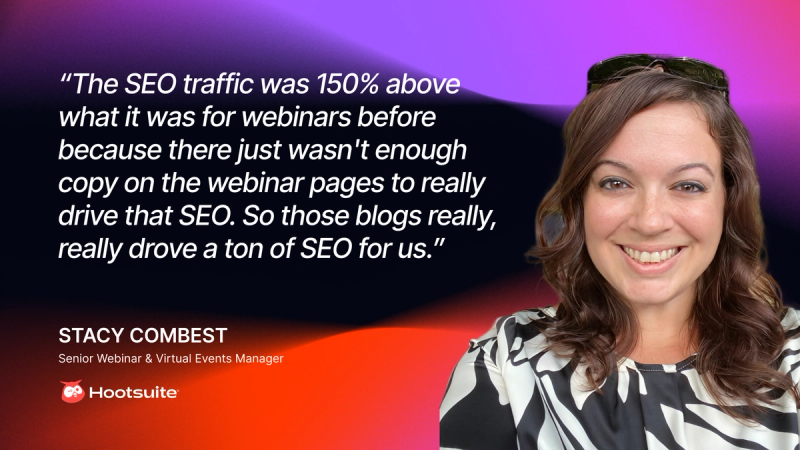
Hootsuite's 150% boost in organic traffic
Hootsuite’s Manager of Webinar Marketing, Stacy Combest, runs the brand’s webinars on Goldcast’s virtual event platform. Then, she uses Content Lab to automate the creation of video snippets and transcripts — reducing video content creation time from days to hours. 🎉
Incorporating our AI tools into her video workflow significantly boosted Hootsuite’s SEO, resulting in a 150% increase in organic traffic to their webinar pages, and a 28% lift in on-demand views.
Qualio's 6x increase in efficiency
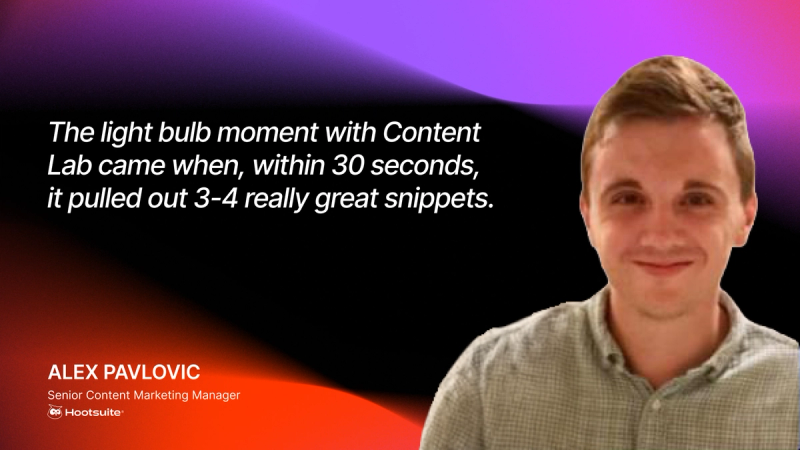
Qualio is a provider of quality management systems for life sciences. In their quest to scale their webinar program, they started hosting events with Goldcast. Before Content Lab, Senior Content Marketing Manager Alex Pavlović spent 2-5 hours editing each hour of event footage. Great content? Yes. Efficient? Definitely not, especially for a content team of one.
Content lab helped Alex reduce the video repurposing process to five minutes — a sixfold increase in efficiency. 🙌🏼
🗝️ Key takeaways: AI in video marketing
- Whether you're a solo marketer or leading a full team, AI helps you get more ROI
- AI tools can streamline video production, from ideation to post-production
- The biggest efficiency gains come from AI-powered repurposing, which can reduce hours of editing work to just minutes
Making AI accessible to B2B video marketers is one of our top priorities. With Content Lab, you can efficiently repurpose the video content you create for a variety of channels — boosting your video ROI in the process.
Transform Your Video Marketing with AI

© 2026 Copyright Goldcast, Inc. All rights reserved.
YOUR PRIVACY CHOICES