





 Upcoming Events
 Event Series
 On-Demand Events


What the Future of Marketing Work Actually Looks Like in 2026

Table of Contents
Maximize Your Marketing ROI
Join 10,000 other marketers already getting the best tips on running engaging events that boost pipeline and create raving fans.
Day one of the Future of AI Marketing event covered strategy. Content systems, GEO, and what the marketing org of 2027 needs to become. Day two was about doing the work. Buyer signals, team adoption, and building tools without writing code.
Day three, which we hosted on March 27th with the AI Marketing Alliance, was about how the work itself gets done. Two sessions. A panel on AI-driven workflows with leaders from Notion and Wrike. And a keynote from two members of OpenAI’s marketing team who walked through exactly how they built an agentic system from scratch, including every mistake they made along the way.
Here’s what we took away.
The workflow is the team member
Kelly Cheng, CMO at Goldcast, opened the day with a framing that set the tone for everything that followed. The question isn’t what AI can create. It’s how work moves through the org.
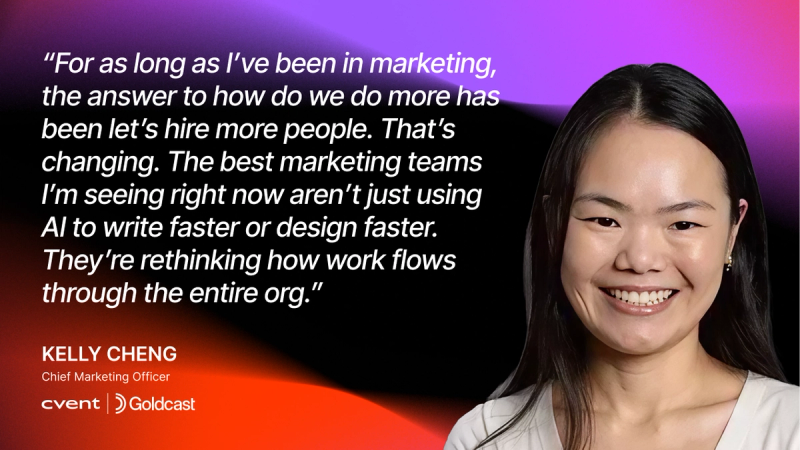
She brought on Anya Carian, who runs digital marketing at Notion, and Melissa Kovak, who leads demand gen at Wrike. Both work at companies where the product is the operating system for how teams get things done, which means they see the patterns earlier than most.
Anya drew a line between basic AI usage and actual workflow transformation. Using AI to generate a draft or clean up a document saves a few minutes. That was 2024. The teams seeing real results in 2026 have moved to a different level entirely.
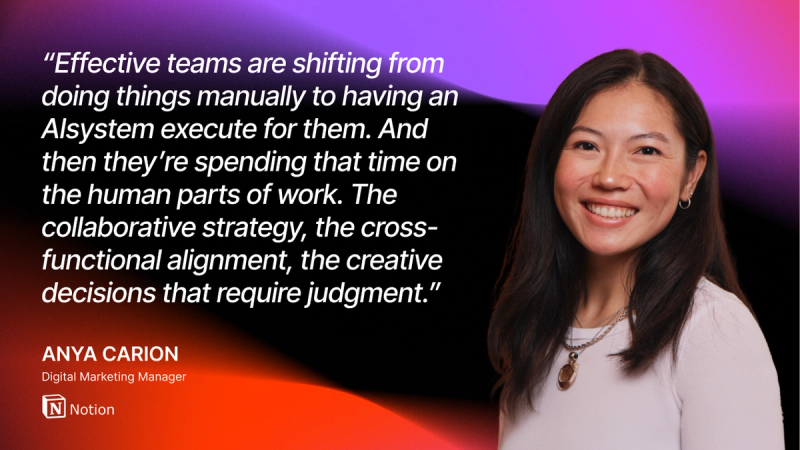
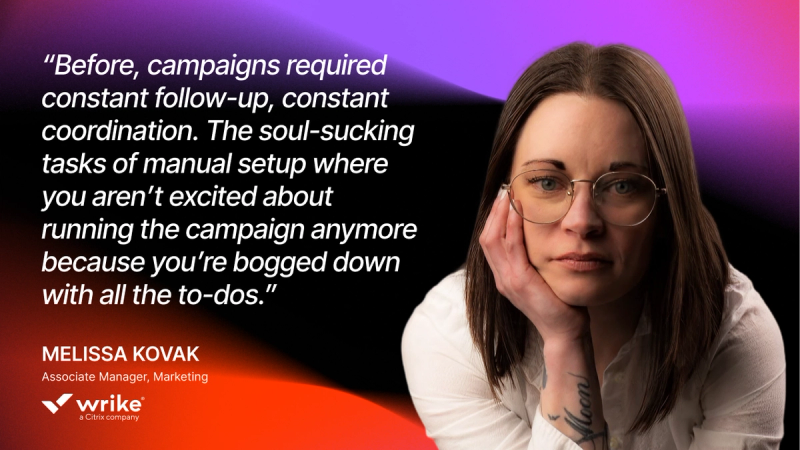
Melissa framed it from the demand gen side. A workflow-first team doesn’t mean fewer people. It means fewer manual handoffs. Campaigns that get triggered by inputs like a product launch or a content milestone, not kicked off in meetings. Briefs, timelines, and dependencies that are automatically generated instead of rebuilt from scratch every time.
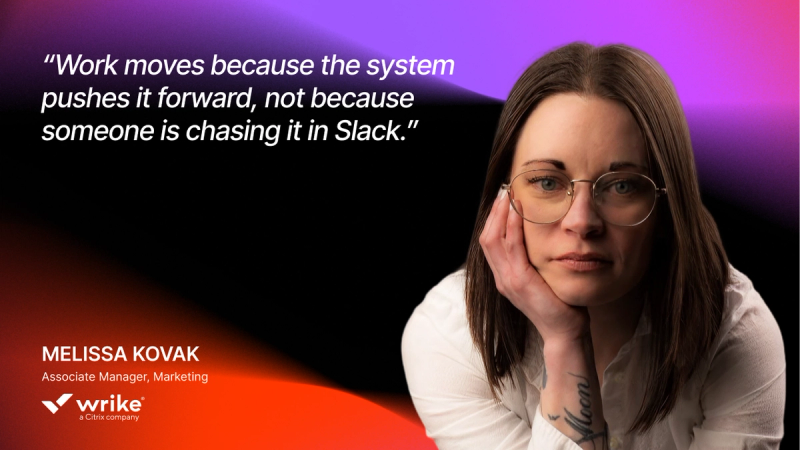
That line landed with the audience because every marketer knows exactly what she’s describing. The invisible work. The follow-ups, the status checks, the who-owns-this questions that eat half the day before any actual marketing happens.
Orchestration is where the real shift happens
Both speakers agreed on a critical distinction: execution versus orchestration. Most teams are still using AI at the execution layer. Write this email. Summarize that document. That saves time, but it doesn’t change how the team operates.
The real shift happens when AI sits at the orchestration layer, deciding what happens next, routing work to the right person, and flagging problems before they become fires.
Melissa gave a specific example from Wrike. If a campaign asset is delayed, the system automatically adjusts downstream timelines, notifies stakeholders, and reprioritizes the work. Nobody has to step in and manage it.
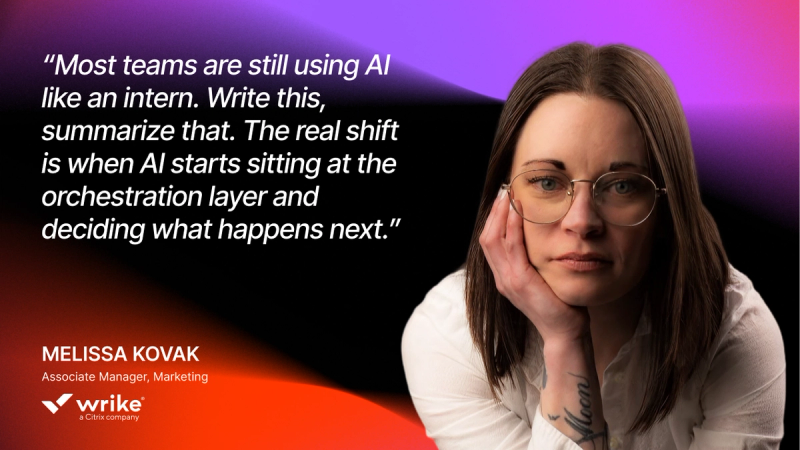
Anya added that orchestration works best when AI has visibility into the full context of a team’s work. When it knows the priorities, the deadlines, the dependencies, it can coordinate in a way that no individual person could. The coordination that used to live in someone’s head or buried in Slack threads gets embedded into the system itself.
Getting started without getting overwhelmed
One of the most practical moments in the session came during Q&A, when Anya broke down her recommendation for teams just getting started with agents. She thinks about it in three buckets.
First, Q&A agents. Can it answer questions coming in from the team, from Slack, from wherever work happens? Second, triaging agents. Can it take a new request and automatically route it to the right person for feedback or escalation? Third, update agents. Can it pull together everything that happened across a set of projects and compile it into a weekly report?
Melissa’s favorite workflow was campaign orchestration. She described what she called her “AI agent army” at Wrike. Fill out an intake form, and that single trigger kicks off the full workflow. Tasks, timelines, dependencies, and stakeholder notifications all generated instantly. Progress tracked in real time. Executive dashboards updated without another meeting or Slack message.
OpenAI tried to build everything at once. It didn’t work.
The second session brought Jeff Canada, marketing operations lead at OpenAI, and James Finley from OpenAI’s digital team. They came with a presentation that was part architecture walkthrough, part honest confession about what went wrong before anything went right.
Jeff started with the context every marketer recognizes. You’re being asked to do more with less budget, less headcount, and higher expectations. Customers demand personalization. Executives want more AI. And you’re caught in the middle trying to figure out how to make it all work.
Their first attempt was to build one massive agent that handled everything. Reading requests, writing SQL, formatting lists, building campaigns. One big process that would do it all.
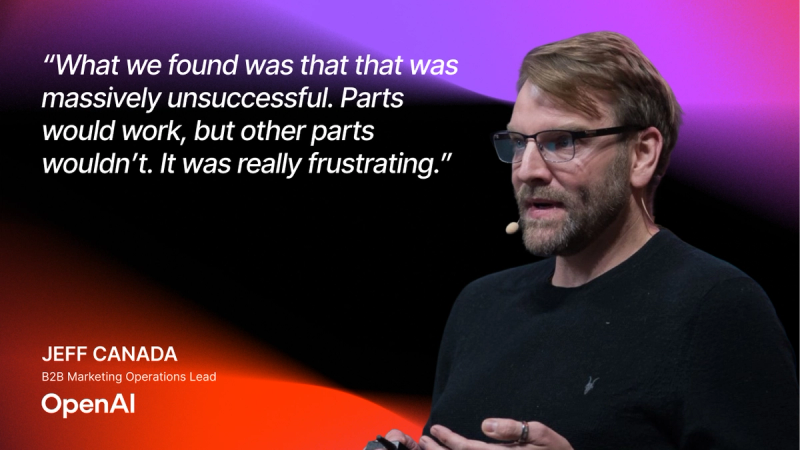
Jeff and James walked through why it failed. They were too ambitious. Small changes upstream had massive impacts downstream that they couldn’t isolate. They left critical context out of the system, keeping naming conventions and brand guidelines and best practices in their heads or on whiteboards instead of feeding them into the AI. Their data wasn’t clean. And their existing tools weren’t built to work with what they were trying to do.
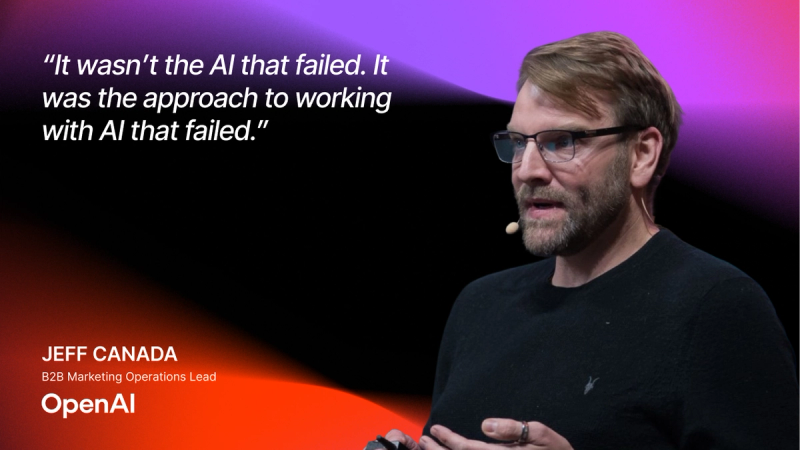
The Scout framework: Task-based agent named after a dog
The pivot came when they stopped trying to build one massive system and started thinking in building blocks. Jeff’s approach was to break the work into the smallest meaningful steps, starting with the very first thing he does when a campaign request comes in: reading it.
He built a single agent whose only job was to take an unstructured Slack message or Google Doc and turn it into a structured, labeled ticket. That was it. One agent. One task.
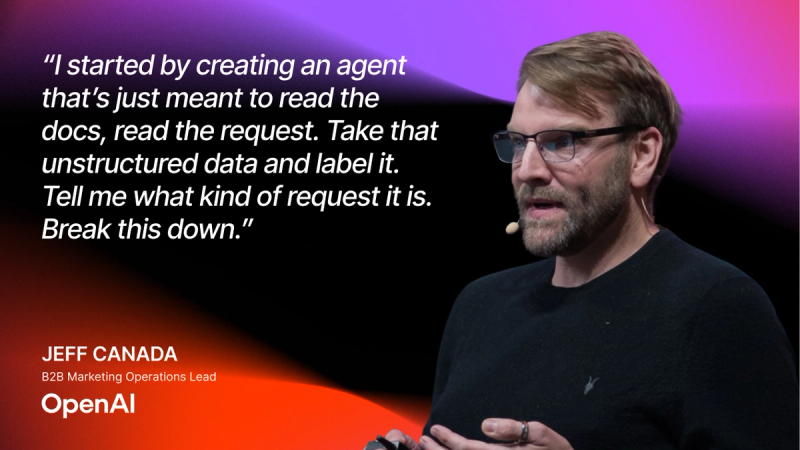
They named the system Scout, after Jeff’s dog. Each Scout handles one specific task with a human-in-the-loop check between each step.
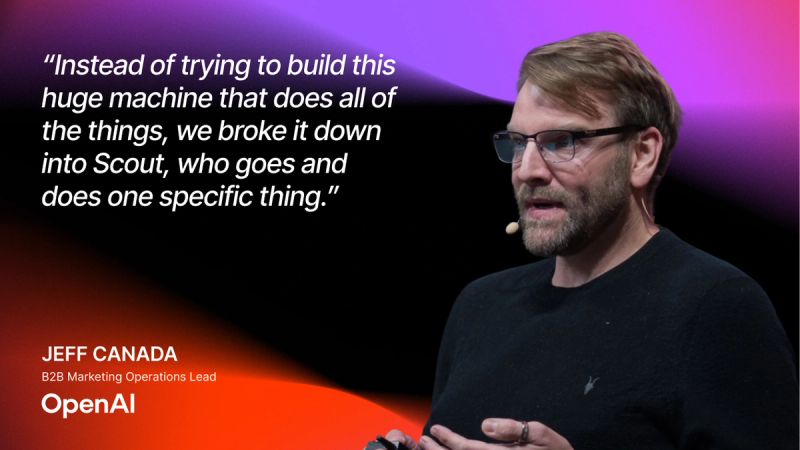
Scout takes a hypothesis from a marketer and turns it into an operational audience definition, complete with a SQL query. Asset Scout assembles the pieces needed to launch a campaign: the experiment charter, the email creative, the test parameters. Staging Scout connects everything into the deployment tools. Ship Scout launches it.
James described it as LEGO blocks. Each Scout is a building block with a clear input and a clear output. You battle-test one block until it works reliably, then attach the next one. The first piece took Jeff about a week of focused work. After that, each new Scout took an afternoon, because the framework was already in place.
Learn how Goldcast event data can become an input signal for your marketing workflows →
Build versus buy is the wrong question
One audience question cut to something a lot of teams are debating: should you build your own AI workflows or buy SaaS tools?
James reframed it. It’s not one or the other. The SaaS tools provide the guardrails and context that agents plug into. The agentic layer sits on top, interacting with those tools in new ways.
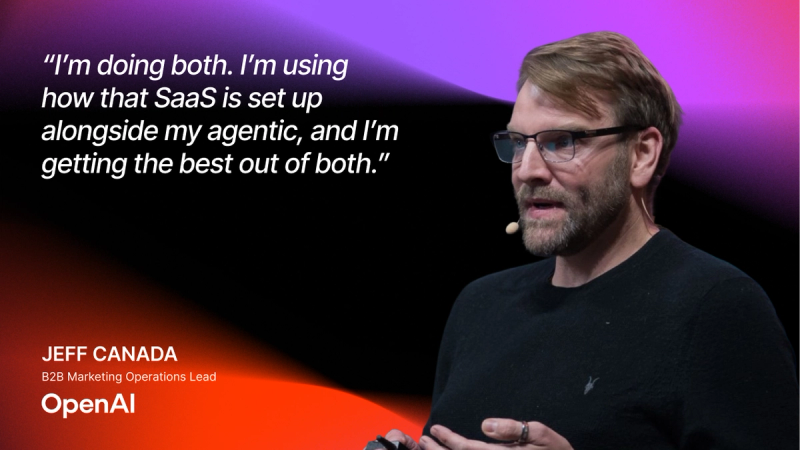
Jeff agreed. He’s not trying to build an email orchestration platform from scratch. That’s a solved problem. But he is using agents to interact with those platforms ten or a hundred times more than he could manually.
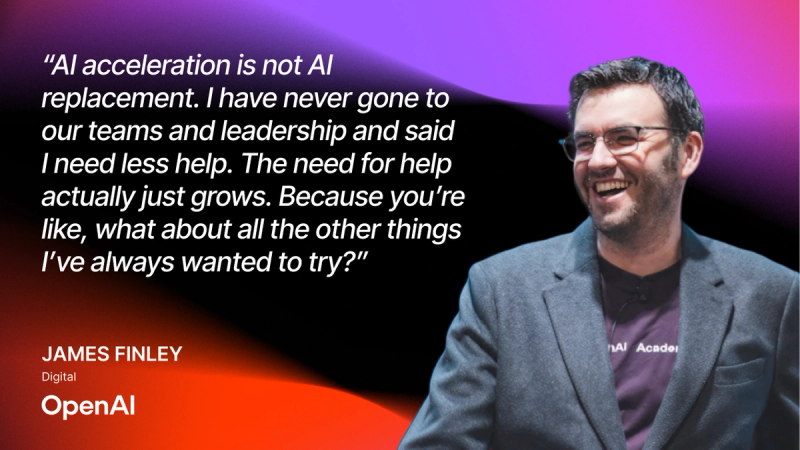
The final point they made together was about the relationship between AI and headcount. James was direct about it.
What this means for your team
Two themes ran through every conversation on day three, and they connect directly to what we heard on days one and two.
Orchestration matters more than execution. Every speaker made the same point from a different angle. The AI that writes your email draft saves you fifteen minutes. The AI that routes your campaign through six teams, adjusts timelines when assets slip, and flags risks before they become blockers changes how your entire org operates. If your team is still using AI only at the task level, the gap between you and the teams running AI at the orchestration layer is growing fast.
See how Goldcast captures event engagement signals that power your marketing workflows →
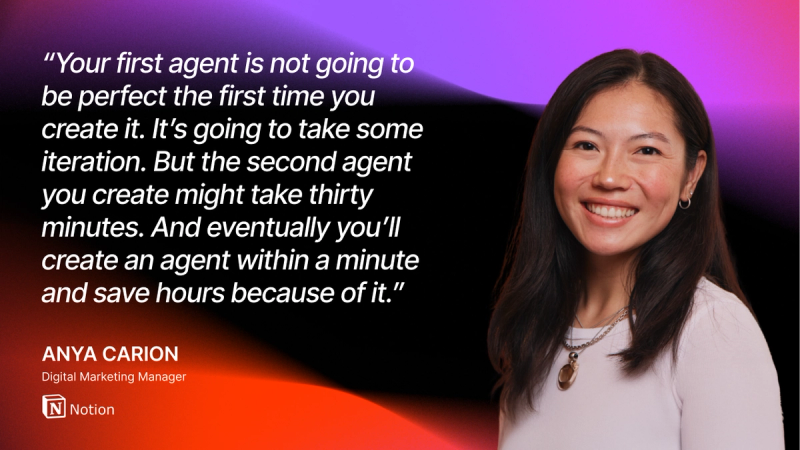
Start with one block, not the whole system. OpenAI tried to build everything at once and it failed. When they broke it down into single-purpose agents with human checkpoints between each step, everything clicked. Notion and Wrike both emphasized the same approach. Your first agent won’t be perfect. It doesn’t need to be. It needs to work well enough to give you the foundation for the next one.
The job description is already changing. As Anya put it, you’re not hiring someone to do the work anymore. You’re hiring someone to design how the work gets done. The strongest marketers today aren’t just executing tasks. They’re mapping how work should flow, asking where the bottlenecks are, and building systems that move without being pushed.
The Future of AI Marketing event ran across three days covering content strategy, buyer intelligence, team adoption, workflow automation, and the executive perspective on where this is all heading. If you attended one day or all three, one session or all nine, we hope you’re leaving with ideas you can act on this week.
Build the Marketing Engine That Runs Itself
Goldcast captures event engagement data that feeds your workflows, powers your scoring models, and gives your team the signals they need to act. See how marketing teams are turning events into their highest-impact channel.
FAQs
1) What is a workflow-first marketing team?
A workflow-first marketing team is one where AI and automation handle the coordination, sequencing, and routing of work rather than relying on individuals to manually manage those handoffs. Instead of kicking off campaigns in meetings and chasing updates in Slack, the system pushes work forward based on triggers and inputs. The humans on the team focus on strategy, creative judgment, and quality decisions while the system handles the operational movement between steps.
2) What is the difference between AI execution and AI orchestration?
AI execution means using AI to complete individual tasks like drafting an email or summarizing a document. AI orchestration means using AI to coordinate how work flows across a team, deciding what happens next, routing tasks to the right person, adjusting timelines when something changes, and flagging issues before they escalate. Execution saves minutes. Orchestration changes how the team operates.
3) How should marketing teams start building AI agents?
Start with one specific, repeatable task rather than trying to automate an entire workflow at once. Good starting points include a Q&A agent that answers common team questions, a triaging agent that routes incoming requests, or an update agent that compiles weekly reports. Your first agent will take some iteration to get right, but each subsequent one gets faster to build as you develop the pattern. Focus on something you either love, hate, or do repeatedly.
4) What is OpenAI’s Scout framework for marketing automation?
Scout is the internal framework OpenAI’s marketing team built for agentic automation. It breaks campaign workflows into discrete, single-purpose agents (called Scouts, named after a team member’s dog) that each handle one step. Definition Scout structures incoming requests. Asset Scout assembles campaign materials. Staging Scout connects everything to deployment tools. Ship Scout launches the campaign. Each Scout has a human-in-the-loop check between steps, and the framework is designed so new agents can be added like LEGO blocks.
5) Does AI replace the need for marketing headcount?
No. Every speaker at the event made this point explicitly. AI changes what marketers spend their time on, but the need for people grows rather than shrinks. When teams automate repetitive operational work, they free up capacity to run more experiments, pursue more strategic initiatives, and tackle problems they never had bandwidth for before. The job description shifts from manual execution toward systems thinking, workflow design, and quality oversight, but the demand for talented marketers increases.
Transform Your Video Marketing with AI
© 2026 Copyright Goldcast, Inc. All rights reserved.
YOUR PRIVACY CHOICES