




 Upcoming Events
 Event Series
 On-Demand Events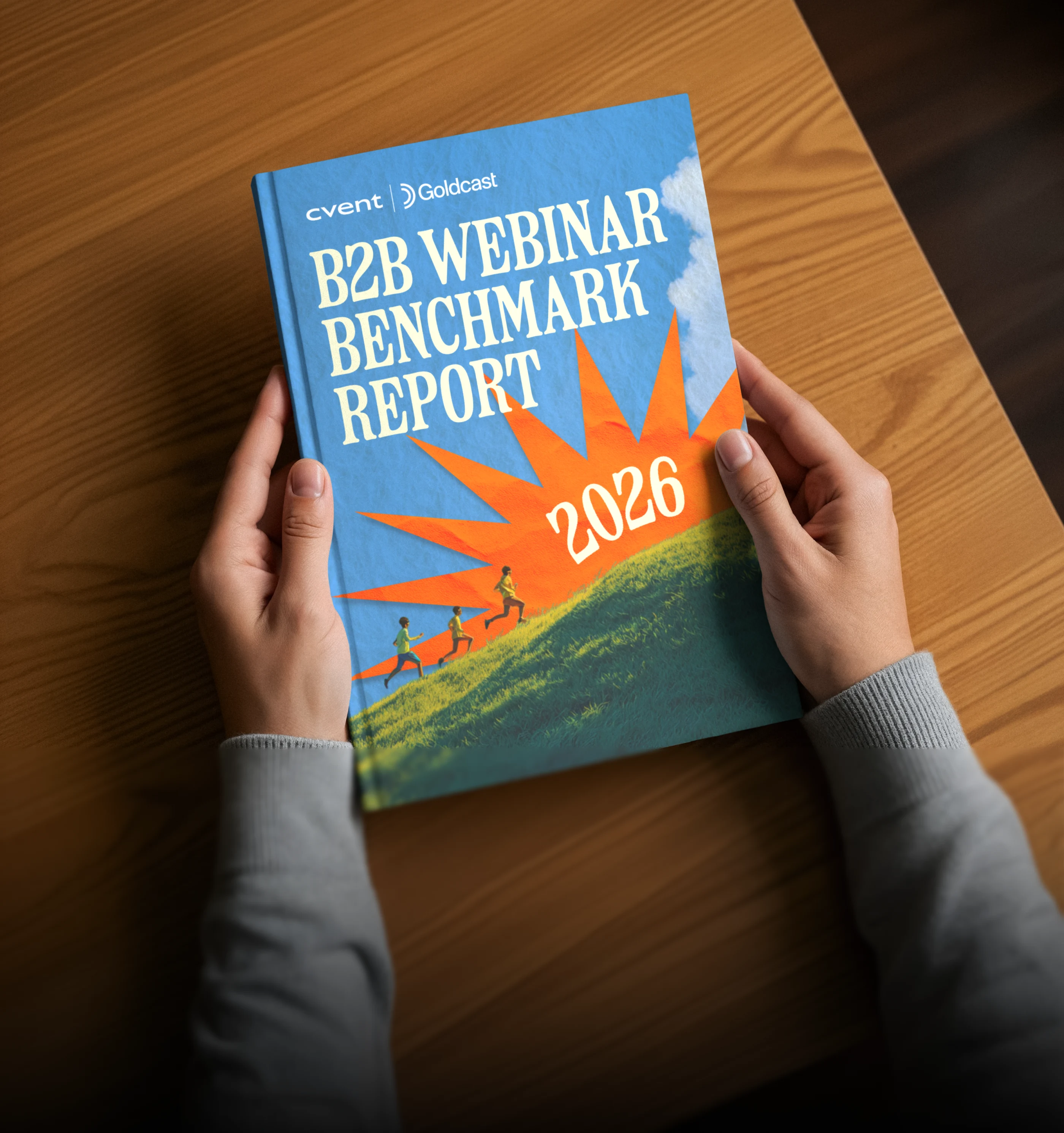


What Is an Agentic Workflow? And Why It’s the Future of B2B Marketing

Table of Contents
Maximize Your Marketing ROI
Join 10,000 other marketers already getting the best tips on running engaging events that boost pipeline and create raving fans.
In May 2026, Google debuted “information agents” that comb the web and deliver pertinent-to-you information around the clock. If you’re familiar with AI agents, that move likely makes perfect sense to you, as agents are proactive go-getters that make life easier.
And if you're new to AI agents, think of them as tools that understand your goals and make moves accordingly, without you having to micromanage every step along the way. Google’s agents are a great example; you can just tell them what you’re interested in, and they’ll keep you updated.
An agentic workflow is a process where an AI agent autonomously plans and executes a multi-step task. AI agents also have the ability to iterate based on what they learn.
Much of what we call “AI” today is still traditional automation, but as Google proves by its latest move, agents are becoming more common by the day.
Agentic workflows vs. traditional automation
Most marketing AI acts like a digital intern: It's capable, but it needs constant instruction and oversight. You ask a tool to write you an email or a social post, and it will, and it might be pretty good. But then you're back to square one, strategizing what to do next.
Contrast agentic with traditional automation, and you'll see they're almost opposites. Traditional automation follows rules and templates, and it's reactive and static.
With agentic AI, the tool is more goal-oriented and dynamic. It's self-directed. Instead of following your pre-programmed sequence, it evaluates the entire situation, considers multiple options, and then takes the option most likely to achieve your desired goals.
To go back to our intern analogy, traditional AI is the intern waiting patiently for instructions. Agentic AI? It’s the coworker at the next desk who already knows the plan and just starts getting it done.
Tl;dr? The difference between traditional automation and agentic workflows comes down to how much of the work still depends on you.
Why B2B marketers need the agentic shift
In our 2026 B2B Webinar Benchmark Report, we found that almost 98% of all video clips generated in Content Lab were made by AI. Marketers are keen on saving time, and AI is helping them do that.
However, the typical marketing stack is a collection of disparate tools that require manual intervention to bring together in any meaningful way. Even with the help of AI, you still have to orchestrate every step. You host a webinar and upload it to Content Lab. Then you review each clip and apply branding. Next, you write captions for each channel, schedule the posts in a different platform, and then track performance in yet another dashboard.
The AI paradox is that most "AI-powered" tools still require a ton of manual work, even though they’re saving beaucoup time, when compared to the “old ways.”
Agentic workflows are fundamentally different and let you uplevel yet again. Instead of managing multiple tasks, you're able to offload an entire process. You define the outcome you want and let the system figure out how to achieve it.
Note: Agentic workflows can help you rank in search, but you’ll need to do a pre-publish quality check
We’d be remiss not to issue this warning: While agents are powerful, you can’t fully offload content production to them and expect to rank. Search tools are getting increasingly adept at spotting AI-generated content and downranking it for not meeting the target criteria (here’s Google’s, for reference), so you’ll want to have the final say over what goes live.
However, agents can help with all of the other parts of the process. They can find the “best” moments in your recordings, draft valuable blogs based on what’s performed well in the past, and knock out other similar tasks. This won’t offload everything, but it does allow you to take a look at the content when it’s almost ready to go, versus having to be involved every step of the way.
What makes a workflow agentic?
Here are the five core components:
1. AI agents
The agent puts the work in workflow: planning the steps, executing them, evaluating results, adjusting for the future. In a B2B marketing context, an AI agent might own your post-event content process from start to finish.
2. Large language models (LLMs)
LLMs give the agents the ability to understand your brand voice and goals. Without an LLM running underneath the agent, the agent would not have the level of nuance and judgment that is required to do their job.
3. Access to tools and data
An agent needs all the information it can get. Ideally, AI agents can access your video library, CRM, analytics, and all publishing platforms.
4. Feedback and iteration
This is what separates agentic workflows from automation; agents can figure out what worked and why, and they apply that knowledge going forward.
5. Goal-setting and context
Finally, the agent needs to know what you want to achieve. Something like, “Grow engagement from this account before their renewal date in six months” is a tangible goal the agent can plan around.
Get Access to Goldcast Agents
We’re building agentic tools that edit, curate, and analyze your video content. Join the limited beta below!
Agents in action: 3 B2B marketing examples
Here are three real-world scenarios that showcase how Goldcast Agents can transform your marketing work:
#1: Agentic Video Editor
The best parts of your footage, in a fraction of the time.
Inputs: Raw event recording + brand kit
Outputs: Publish-ready video with jump cuts, captions, scene changes, and overlays
Instead of having to work through every recording manually, the Agentic Video Editor handles all of the technical execution. You come in at the end to review the output and decide what’s ready to go.
#2: Agentic Content Curator
You can finally find that clip you’re looking for, no matter where it is in your library.
Inputs: Full video library + brand story + audience profile
Outputs: Surfaced clips matched to brand and audience
This agent helps you locate that ever-elusive clip you’ve been looking for. As your video library grows, finding the exact moment you’re thinking of is no small task, and the Content Curator takes it over with ease. Your only job now is to decide what to do with the clip.
#3: AI Event Analyst
When it comes to your events, find out what worked and what didn't.
Inputs: Event and engagement data
Outputs: Performance benchmarks and recommendations for future events and content
Instead of manually pulling reports across multiple dashboards, the Event Analyst gives you a clear read on webinar performance. That way, you can plan future events with a strong picture of what worked well.
You need workflows that are less reliant on you
Agentic AI is already running inside many platforms. The goal when using agents isn’t to scale in the name of “more”; the goal is to hand off the more burdensome tasks so that you can focus on the high-level strategic work.
By handing off the orchestration work and giving it to an agent that will remember to keep working toward your goal over time, you gain freedom while retaining creative control. If you’d like to explore using agentic AI as a trusted teammate, get in touch with us below.
Build Your Agentic Marketing Strategy
Be one of the first B2B marketers using AI agents to automate complex workflows while focusing on strategic growth.
Agentic workflows FAQs
What is an agentic workflow?
An agentic workflow is a process where an AI agent autonomously plans, executes, and iterates a multi-step task to reach a goal. Unlike traditional automation, agents can pivot their approaches, based on results.
How does agentic AI differ from automation?
Traditional automation follows a predefined series of steps and requires heavy manual intervention. An agentic workflow is given a goal and the context it needs to pursue it. From there, it plans its own steps and improves over time.
What are examples of agentic workflows in marketing?
Common examples include:
- AI video editors that handle technical editing end to end
- Content curators that surface the right clips from a video library without manual searching
- Event analysts that benchmark performance to improve future content and events
Why are agentic workflows so important now?
B2B marketing teams are grappling with high content demands, without the teams to keep up. Most AI tools still require heavy human involvement, and agentic AI allows marketers to lessen the work on their plates, while still producing enough content to stay competitive.
Does Goldcast offer agentic AI tools?
Yes! Goldcast Agents include the Agentic Video Editor, which is available now, the Agentic Content Curator, currently in beta, and the AI Event Analyst, coming soon. Together, they handle video editing, clip discovery, and event benchmarking, connecting directly to your video library and event data.
Transform Your Video Marketing with AI
© 2026 Copyright Goldcast, Inc. All rights reserved.
YOUR PRIVACY CHOICES